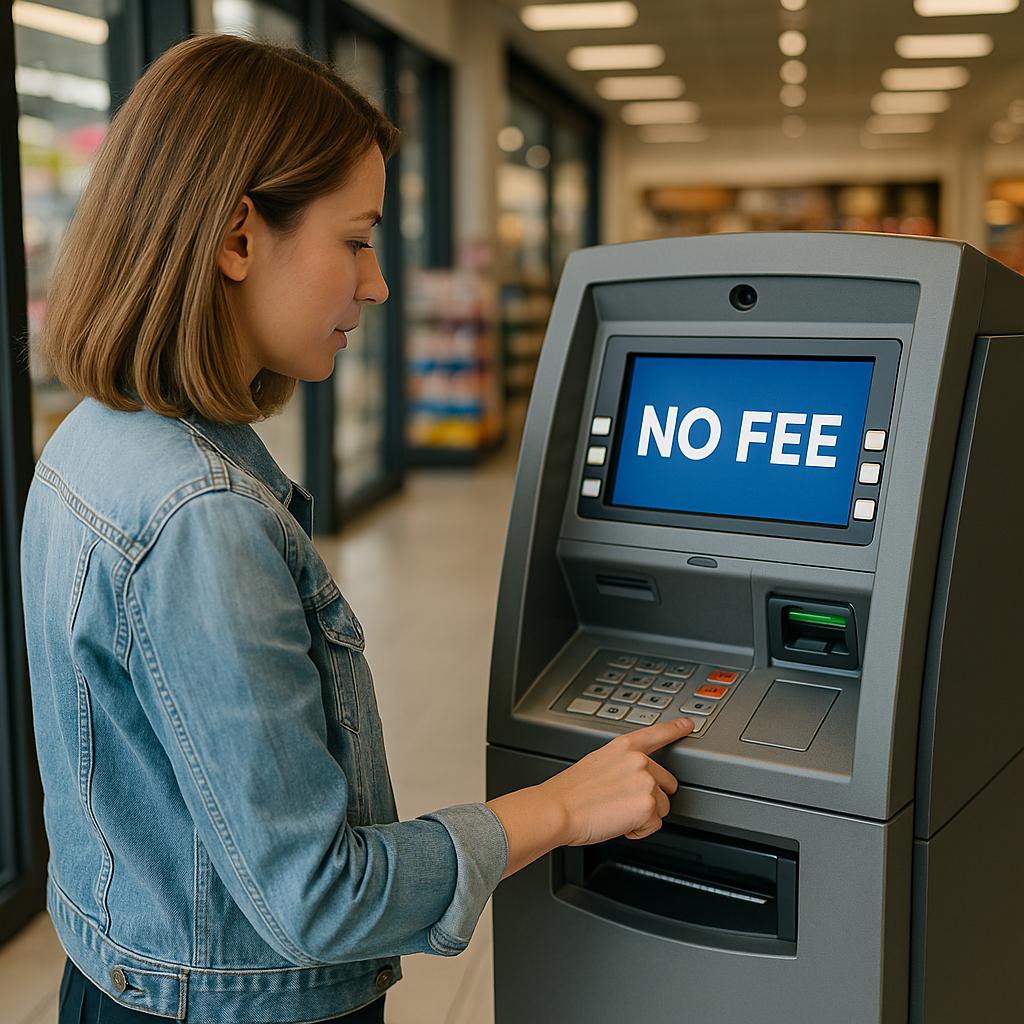
No-fee ATM networks are one of the easiest ways to avoid paying withdrawal fees. Instead of relying only on your bank’s physical branches, these networks give you access to thousands of surcharge-free ATMs nationwide.
This guide explains the best no-fee ATM networks, how they work, which banks use them, and how to make sure you’re withdrawing cash without extra charges.
What Is a No-Fee ATM Network?
A no-fee ATM network is a group of ATMs that partner with banks and credit unions to allow customers to withdraw cash without paying ATM operator surcharges.
When your bank participates in one of these networks, you can use any ATM within that network as if it were your bank’s own machine.
Keep in mind that while the ATM operator fee is waived, some banks may still charge an out-of-network fee depending on your account type.
Best No-Fee ATM Networks in the U.S.
These are the most widely used no-fee ATM networks available across the United States:
Allpoint Network
The Allpoint network is one of the largest surcharge-free ATM networks in the country. Its machines are commonly found inside retail locations such as grocery stores, pharmacies, and convenience stores.
- Widely used by online banks and fintech accounts
- Strong coverage in urban and suburban areas
- Convenient locations inside retail stores
MoneyPass Network
The MoneyPass network provides surcharge-free ATM access for many traditional banks and regional institutions. Coverage is especially strong near bank branches and shopping centers.
- Used by a mix of traditional and online banks
- Good availability near bank branches
- Reliable option when traveling domestically
CO-OP Network
The CO-OP network is designed primarily for credit union members. It offers extensive surcharge-free ATM access and shared branching services.
- Ideal for credit union customers
- Includes shared branches and ATMs
- Strong nationwide coverage
How to Know Which ATM Network Your Bank Uses
Not all banks use the same ATM networks. To find out which no-fee network your bank participates in:
- Check your bank’s mobile app or website.
- Look for network logos on the back of your debit card.
- Use your bank’s ATM locator to filter surcharge-free machines.
If you’re unsure whether a specific ATM is fee-free, your bank’s app is usually the most reliable source.
When No-Fee ATM Networks Still Don’t Prevent Fees
While no-fee ATM networks eliminate operator surcharges, fees can still apply in certain situations:
- Your bank charges an out-of-network fee.
- You exceed daily or per-transaction withdrawal limits.
- You are using an ATM outside the U.S.
Understanding your bank’s fee structure is key. For a broader strategy, see how to avoid ATM fees.
No-Fee ATM Networks vs. Bank-Owned ATMs
Bank-owned ATMs are typically the safest option for avoiding fees, but they aren’t always nearby. No-fee ATM networks fill the gap by offering wider geographic coverage without surcharges.
If you often use ATMs outside your bank’s branches, review using an ATM at a different bank to understand when fees apply.
How Withdrawal Limits Affect No-Fee Access
Even when using a no-fee ATM network, withdrawal limits can force multiple transactions — increasing the chance of fees if limits are reached.
Learn how limits work by reviewing ATM withdrawal limits and our cash withdrawal limits guide.
Choosing the Best No-Fee ATM Network for You
The best no-fee ATM network depends on where you live, where you travel, and which bank you use. Urban users often benefit from Allpoint or MoneyPass, while credit union members may prefer CO-OP access.
If your bank participates in multiple networks, using your mobile app to confirm surcharge-free status before withdrawing can help prevent surprise fees.
Bottom Line
No-fee ATM networks make it easier to avoid withdrawal fees without relying on bank branches. By understanding which networks your bank uses and how limits and out-of-network rules apply, you can withdraw cash with confidence and keep more of your money.
For a complete fee-free strategy, start with finding no-fee ATMs near you and expand your approach using ATM fee avoidance tips.